


Giving Circles: How ERGs Can Scale Engagement and Impact

Employee Resource Groups (ERGs) are the beating heart of many organizations. They champion belonging, shape culture, and create meaningful connections across teams. But without the right tools and support, even the most passionate ERG leaders can face burnout. What they need is a model that's scalable, flexible, and welcoming, one that helps employees turn shared values into shared impact while strengthening culture from the inside out.
Why It Matters Now
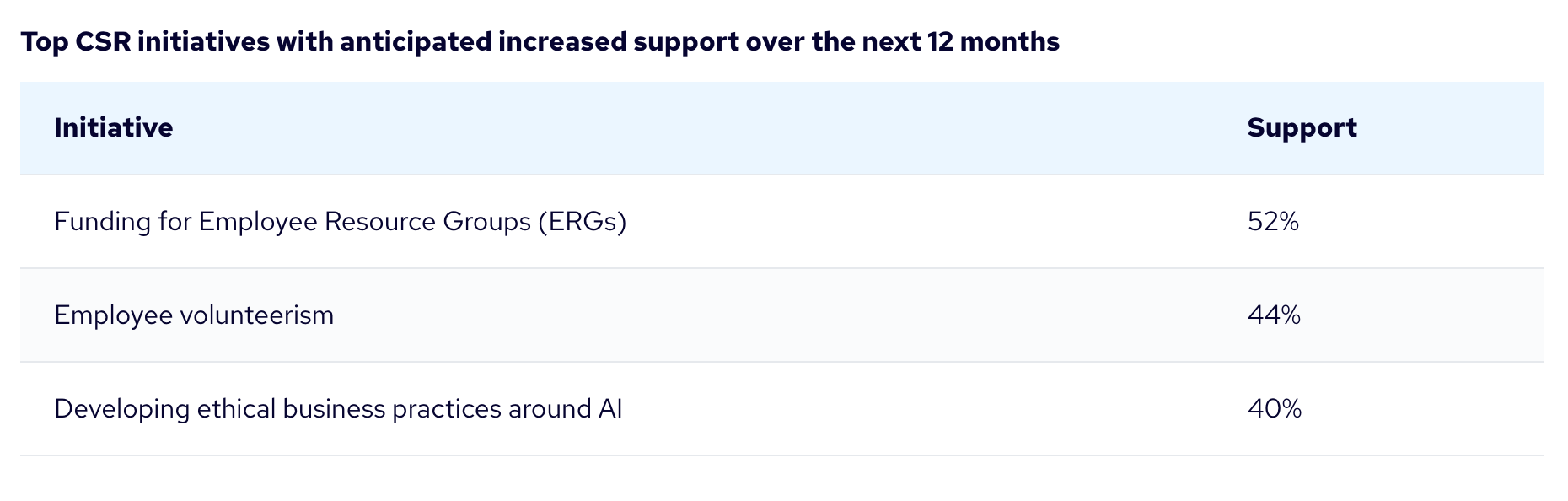
Global employee engagement fell from 23% to 21% in 2024, a drop equal to the decline during COVID-19 lockdowns (Gallup, State of the Global Workplace, 2025). Gallup estimates that reaching best-practice engagement levels could add $9.6 trillion to the global economy. At the same time, ERGs remain one of the most trusted tools organizations have: 91% of leaders say ERGs are an important part of their employer value proposition, and 87% consider them a trusted source of information (Benevity, 2025 State of Corporate Purpose, 2025). Even amid heightened DEI polarization, ERGs continue to serve as low-risk, high-trust bridges to inclusion and connection. And organizations are backing that up with investment: ERG funding is the top area where leaders expect to increase support over the next 12 months (52%), followed by employee volunteerism at 44% (Benevity, The Executive CSR Report, 2025).
The opportunity is clear. Employees want to connect around shared values, and 53% of leaders say the top driver behind increased CSR investment is employee interest in working for a company with impactful initiatives (Benevity, The Executive CSR Report, 2025). Organizations need resilient, employee-driven models to meet that demand. Giving Circles offer a way to channel the energy employees already bring to ERGs into collective action that is measurable and values-aligned.
What Is a Giving Circle?
A Giving Circle is a form of collective philanthropy in which a group of people pool resources, learn about issues they care about, and collectively decide where to direct their support. Members nominate and discuss nonprofit organizations, then vote together on where to send the group's combined funding. Funding can come from a variety of sources: employee contributions, corporate matching programs, corporate foundation budgets, CSR budgets, or dollars-for-doers programs. This flexibility is key to equitable participation, because it means employees can engage fully in the learning, nominating, and voting process regardless of whether they contribute financially.
In a corporate setting, Giving Circles can be embedded within ERGs as a structured way for employees to engage in shared decision-making and community impact, putting the power of philanthropic choice in employees' hands.
How This Takes Shape
At Grapevine, we're seeing organizations embed Giving Circles into existing ERG programming to deepen engagement during meaningful cultural and community moments.
A Parents ERG is integrating a Giving Circle into Bring Your Child to Work Day. Parents and their children will learn about community needs together, nominate nonprofits as families, and vote side by side on where to direct support. The result will be a cross-generational experience of shared decision-making that strengthens culture internally while extending impact outward.

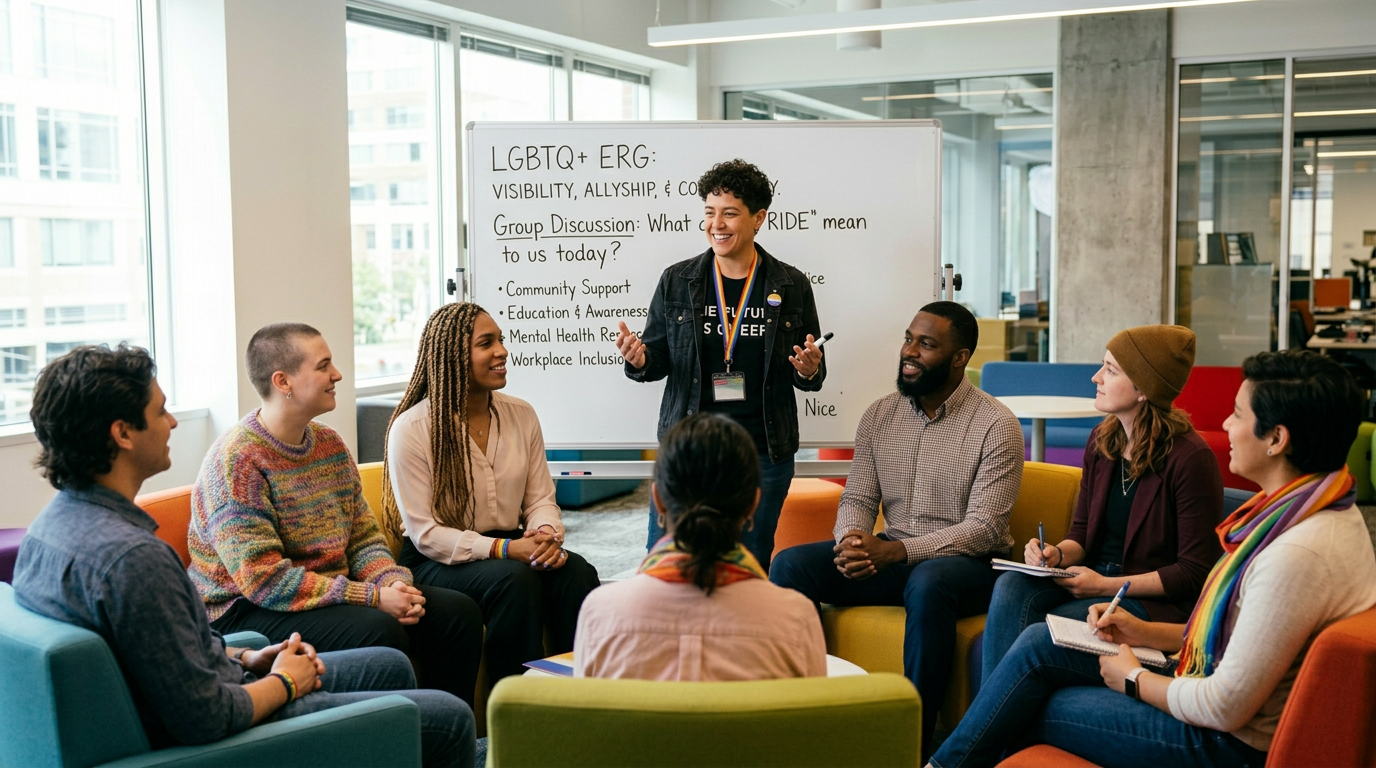
An LGBTQ+ ERG is weaving a Giving Circle into Pride Month programming, transforming celebration into collective action. Participants will explore the needs of LGBTQ+ communities, nominate LGBTQ+-led organizations, and vote together to direct funding. The structure gives employees a meaningful role in shaping impact while ensuring support reflects both employee values and company priorities.
Best Practices
Integrate with existing initiatives. Position Giving Circles as an extension of what ERGs already do. Layer one into a heritage month speaker series as a culminating experience, or add one to a mentorship cohort to deepen shared purpose. Enhance existing touchpoints rather than creating new ones. This is especially important given that 35% of new corporate volunteers start with a low-barrier activity but many programs lack follow-through for sustained engagement (Benevity, The State of Corporate Volunteering, 2026). Giving Circles provide both an accessible entry point and a structured path to deeper involvement. They're also easy to launch, which means ERGs can use them as consistent touchpoints across the year rather than one-off moments.
Develop and Reward ERG Leaders. Giving Circles are also a meaningful way to invest in ERG leaders themselves. Facilitating one requires employees to practice real skills: running inclusive group processes, navigating collective decision-making, and connecting organizational values to community impact. This leadership opportunity can serve as a reward for employees demonstrating existing leadership, or as an accessible entry point into leadership, a chance for emerging leaders to build confidence and capability in a supportive environment. Either way, being selected to lead a circle signals organizational trust and doubles as meaningful recognition for their ERG contributions. For CSR and HR teams, that's a compelling added value: a low-cost way to recognize and develop talent while delivering a high-engagement giving experience.
Make funding accessible. Employees can contribute financially, but they don't have to. CSR teams can use corporate foundation dollars, match funds, or dollars-for-doers programs to seed or cover the Giving Circle. This aligns with a broader grantmaking shift: grant budgets are increasing alongside growing momentum toward unrestricted funding and nonprofit ecosystem investment, especially as U.S. federal funding decreases (Benevity, 2025 State of Corporate Purpose, 2025). Giving Circles complement this trend by directing flexible, employee-informed support to organizations traditional grantmaking might overlook.

Align with impact goals. Use Giving Circles to celebrate cultural heritage months, reinforce inclusion goals, or respond to moments of need. When employees already look to ERGs as spaces of connection and support, especially during challenging times, a Giving Circle provides a tangible way to translate shared values and concern into collective action.
Center storytelling and visibility. Encourage members to share why they care and spotlight the nonprofits they care about through in-person storytelling, virtual presentations, social posts, internal newsletters, and short videos. These stories do double duty: they deepen emotional resonance for participants and build broader awareness across the organization, helping attract new members to the ERG and future Giving Circle experiences.
Measure what matters. Go beyond dollars. Because Giving Circles are built around participation, including nominations, learning, voting, and discussion, they generate meaningful data beyond grant amounts. Use participation rates, nomination activity, employee feedback, and post-event surveys to report on outcomes like engagement, learning, connection, and belonging. This kind of reporting helps CSR and ERG leaders demonstrate value to leadership in terms that go beyond traditional philanthropy metrics.
The Infrastructure Behind the Impact
When logistics, compliance, and grant distribution are handled through a dedicated platform, ERG leaders can focus on fostering connection and creating inclusive spaces for participation.
Grapevine is the only platform built specifically for Giving Circles. It provides the end-to-end infrastructure for corporate Giving Circle programs, from nonprofit vetting and nomination tools to donation collection, voting, and automated grant distribution. The platform integrates with existing employee giving and volunteering platforms like YourCause from Blackbaud, Benevity, and Bonterra CyberGrants, so it complements what CSR teams already have in place rather than fracturing it.
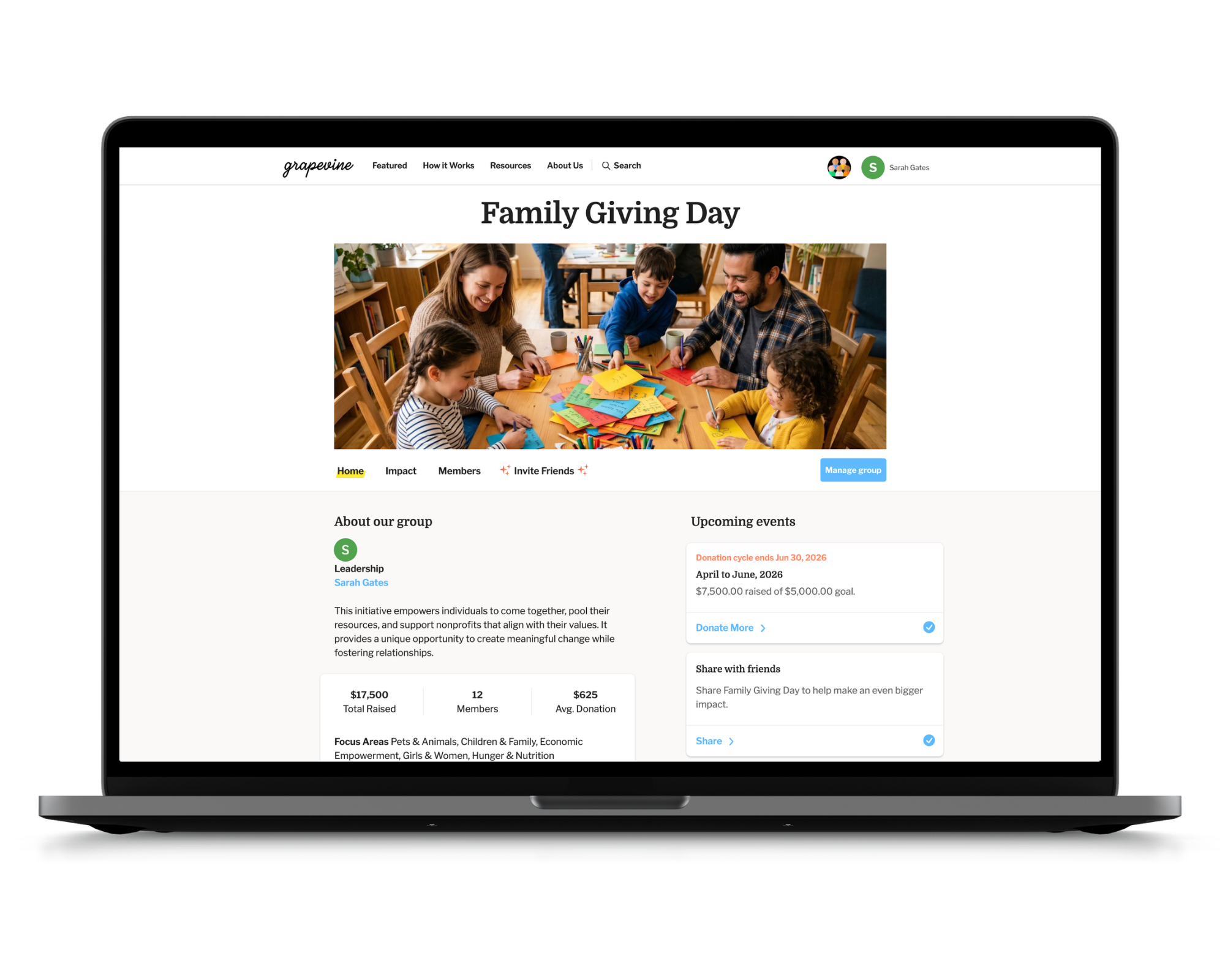
Beyond the technology, Grapevine's team provides hands-on support, including training employee champions, facilitating values alignment exercises and introductions to grantmaking strategies, as well as providing expert facilitation during the Giving Circle experiences themselves. The result is a turnkey program that removes operational friction from CSR teams and ERG leaders while delivering a meaningful, high-engagement experience for employees.
Ready to Build Stronger Communities at Work?
ERGs play a critical role in shaping workplace culture, and Giving Circles offer them a scalable way to channel that influence into lasting community impact. Research from CECP found that companies with a defined corporate purpose had 58% more revenue growth than their peers (CECP, Corporate Purpose: Driving Business Value, 2025). Investing in purpose builds a resilient, future-proof business, and it's the right thing to do.
Connect with Grapevine at [email protected] to explore how Giving Circles can support your ERGs and strengthen your culture.
Let's give better together.
Subscription Needed
Already have an account? Sign in